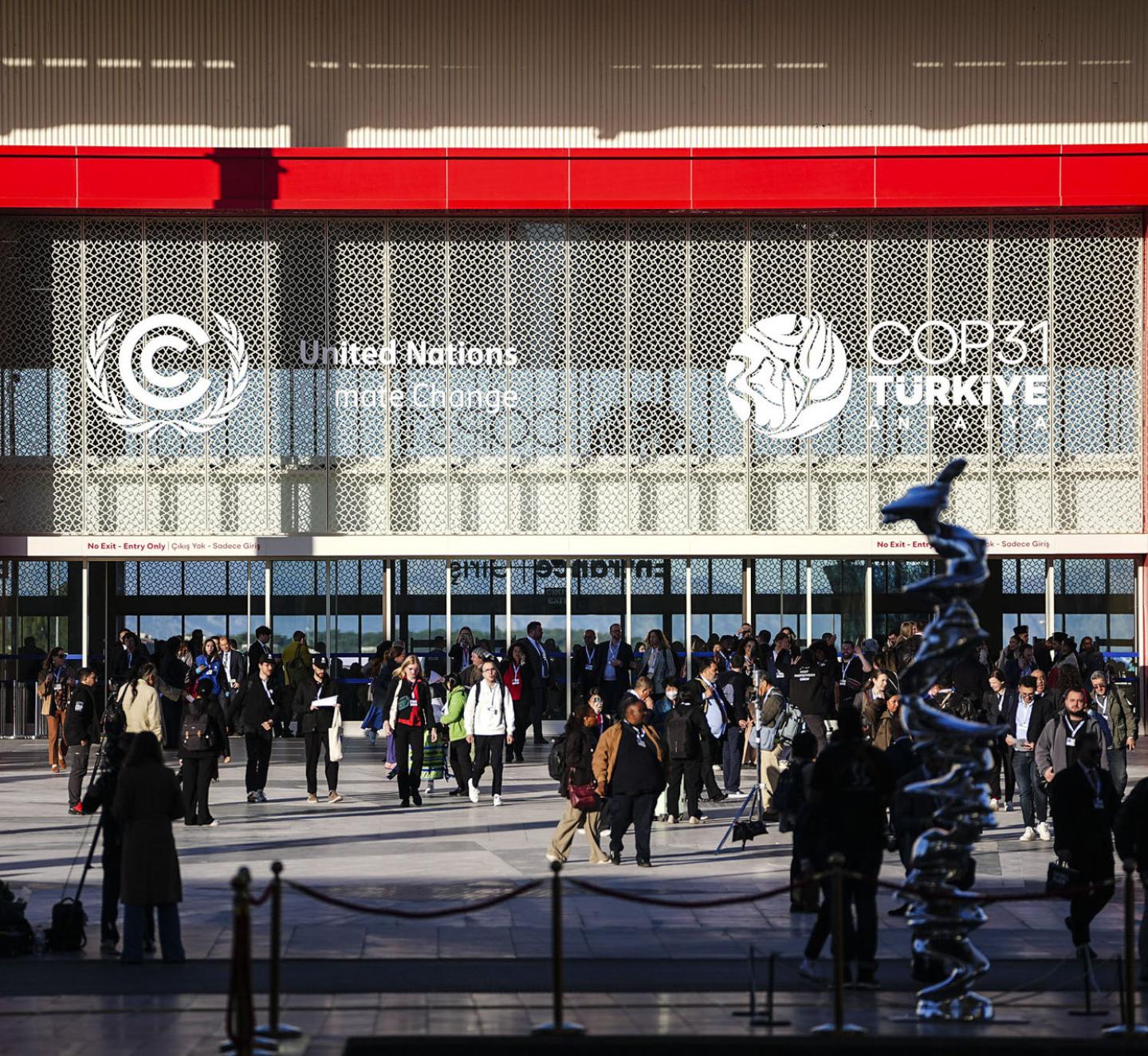
Carbon markets left COP31 with clear momentum. In Antalya, developers, buyers, investors and host governments are focused on the same thing: working together to unlock high-integrity supply.
That progress is easy to miss in the headlines. COP31 ended without an overarching agreement, the first COP since Copenhagen in 2009 to close without a cover decision. The gaps on fossil fuels, adaptation and climate finance are real.
Beneath those headlines, carbon market momentum kept building. The infrastructure is improving: registries, authorisation processes, integrity labels and ratings. More than 100 bilateral Article 6 agreements are signed, yet few ITMO transfers have been completed. The job now is turning agreements into authorised supply and committed demand.
Antalya showcased how governments are driving future demand. China signalled increasing interest in international compliance markets. Many Article 6 bilateral agreements were signed. The Coalition to Grow Carbon Markets came out with a Policy Playbook supported by 16 governments committed to fostering high-integrity voluntary market demand as a means to increase climate finance flows.
Meanwhile, South Pole had a blockbuster COP, announcing its Swiss Government mandate to develop three new Article 6 activities, while Malawi authorised a cookstove programme for use under CORSIA obligations, and Nepal and South Pole agreed to build a jurisdictional REDD+ programme. COP was a clear vote of confidence in our end-to-end model to deliver supply for airlines and sovereign buyers.
After signalling a growing interest in Article 6 over the past few months, China at COP launched the Initiative for Enhancing International Cooperation on High Quality Carbon Crediting Market with Türkiye and Ethiopia. Boosting market confidence even further, Vice President Han Zheng said China will contribute to the fair and effective implementation of CORSIA (Xinhua). China is the world's second-largest air transport market (GreenAir).
The EU had already come to the table earlier this year, setting a role for international credits in its 2040 climate target. With China and the EU both in, the market no longer hinges on any single major economy. The growth trajectory is unstoppable.
The Coalition to Grow Carbon Markets shows the same push on the voluntary side. In Antalya, its 16 member governments launched a Policy Playbook: eight policy levers to grow demand for high-integrity credits. The Coalition says these markets could mobilise USD 30–140 billion a year in debt-free finance by 2035.
The levers are practical: clear rules on how companies can use credits, recognition for companies that take responsibility for ongoing emissions, and incentives including favourable tax treatment, among others. In a WBCSD survey, 85% of companies said internationally aligned government policy would make it easier to take part. Aligned rules counter fragmentation and let developers scale across borders.
The same governments pushing to scale markets also showed up in the Article 6.4 talks on the Paris Agreement Crediting Mechanism (PACM). Many argued that overly complex rules hurt project feasibility and scale. They called for the mechanism to weigh cost and feasibility alongside integrity, so it becomes a practical standard that drives climate finance.
Countries kept signing Article 6 Agreements: Sweden and Côte d’Ivoire, Singapore and Kenya, Singapore and Colombia, Singapore and Zambia, and Korea and Nepal. The overall mantra was ‘build as you go’: make the first transactions happen, then improve the rules and infrastructure based on what you learn from practice. That is how we build a well-functioning market. A market that keeps adapting is a market that keeps growing.
Meanwhile, South Pole announced three major deals at COP.
One of the biggest bottlenecks in scaling compliance carbon markets is the asymmetric risk placed on project developers. High-integrity Article 6 projects need upfront capital, complex technical design and a path through bilateral rules long before a credit is authorised and issued. Asking developers to carry that risk alone holds back new supply.
Switzerland's Federal Office for the Environment (FOEN) has mandated South Pole to develop three high-integrity Article 6 mitigation activities, including battery storage in Chile and household biogas in Senegal. FOEN co-funds the Mitigation Activity Design Documents and commits to set decision windows for credit procurement. Developers face less risk at the design stage. FOEN secures a direct, multi-year channel to future ITMOs built to meet the Swiss CO₂ Ordinance.
South Pole facilitated the world's first formal ITMO transfer with Switzerland three years ago. Now, we are building the supply that comes next.
Our advice to buyer governments for the next six to 12 months: don’t wait for supply to appear. Co-fund design work and commit to clear procurement windows, so developers can start generating the ITMOs you will need.
Right before COP31 started, Malawi's Government granted a Letter of Authorisation (LoA) under Article 6 for the Chitetezo Mbaula Cookstoves project. Self Help Africa developed the project, and South Pole is acting as carbon asset developer through its subsidiary CO₂ Logic.
The LoA covers up to 315,000 tCO₂e, from 2023 vintages onwards under Verra's VM0050 and VMR0006 methodologies, with most units intended for international use. VM0050 is CORSIA-eligible and carries the ICVCM Core Carbon Principles label, so buyers can see the eligibility picture early.
In Malawi, over 90% of households rely on wood and charcoal for cooking, contributing to the loss of about 11,000 hectares of forest a year. The Chitetezo Mbaula is a clay stove made mainly by women's cooperatives, and it halves household wood use compared with an open fire.
Hon. Patricia Wiskes, Malawi's Minister of Natural Resources, said: "Issuing this Letter of Authorisation under Article 6 reflects our readiness to participate in international carbon markets on our own sovereign terms."
Hon. Wiskes opened a capacity-building session hosted by South Pole and the Government of Malawi with the same sentiment and a clear focus on moving beyond talk to transactions.
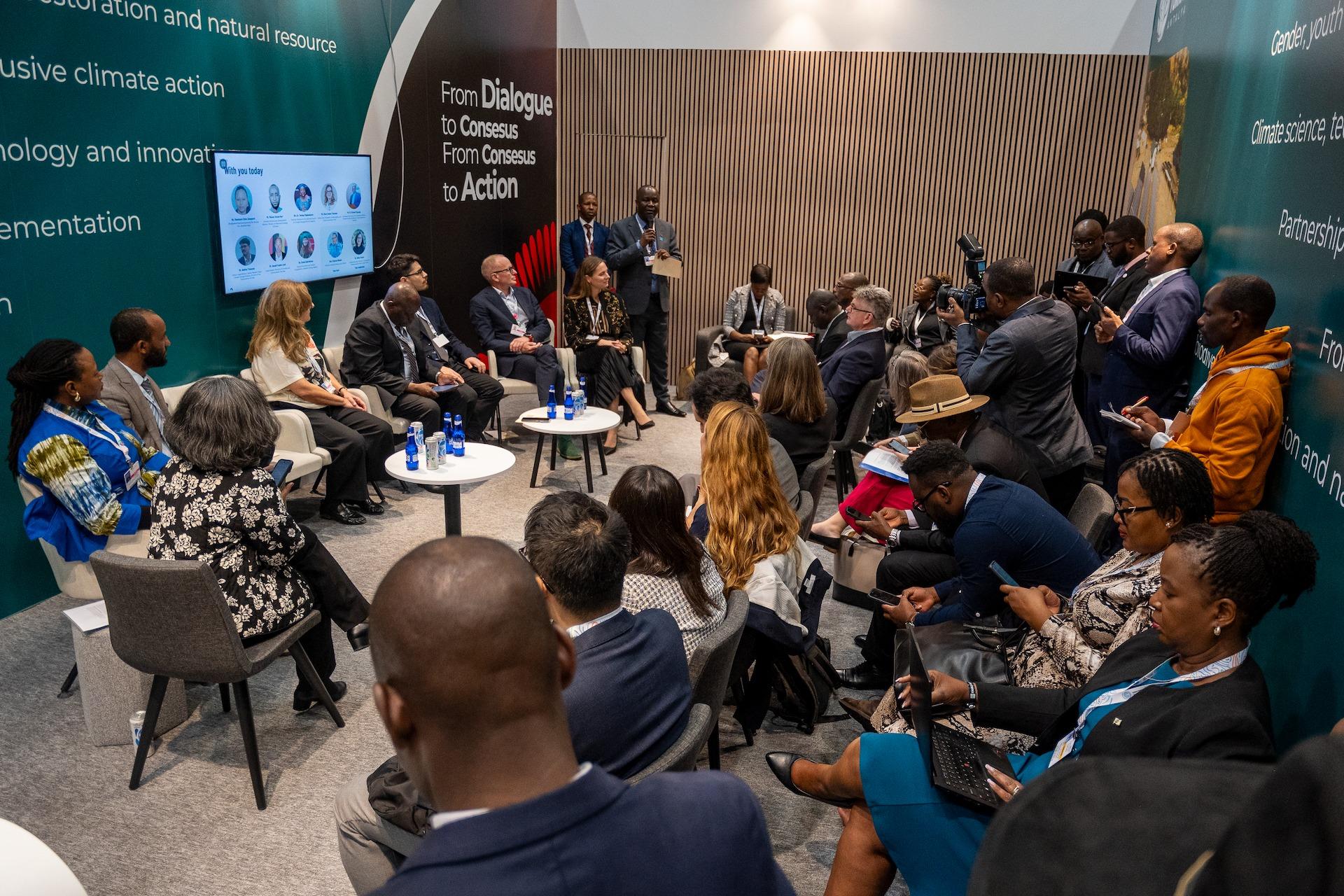
The Government of Malawi and South Pole host a capacity-building event for host and buyer governments at COP31.
In the session, South Pole and the Government of Malawi brought host and buyer governments into one room. The lesson: start with enough, not everything. Countries do not need a mature Article 6 system to engage. Clear leadership, agreed priorities, and an authorisation pathway come first, and the rest evolves by doing.
For host governments, the first step after COP is one route to authorisation: a lead agency, a published list of eligible project types, a decision timeline and a registry ready to track every transfer.
Airlines can now use jurisdictional forest credits for CORSIA, but very few forest nations can supply them. Coordinating ministries, filling data gaps and funding years of safeguards and consultation all come before a single credit is issued.
Nepal has started. It has 46% forest cover, a world-renowned community forestry model, Carbon Trade Regulations and a National Carbon Registry. At COP31, its Ministry of Agriculture, Forests and Environment and South Pole agreed to develop a jurisdictional REDD+ (J-REDD+) programme under the ART TREES standard, starting in selected provinces.
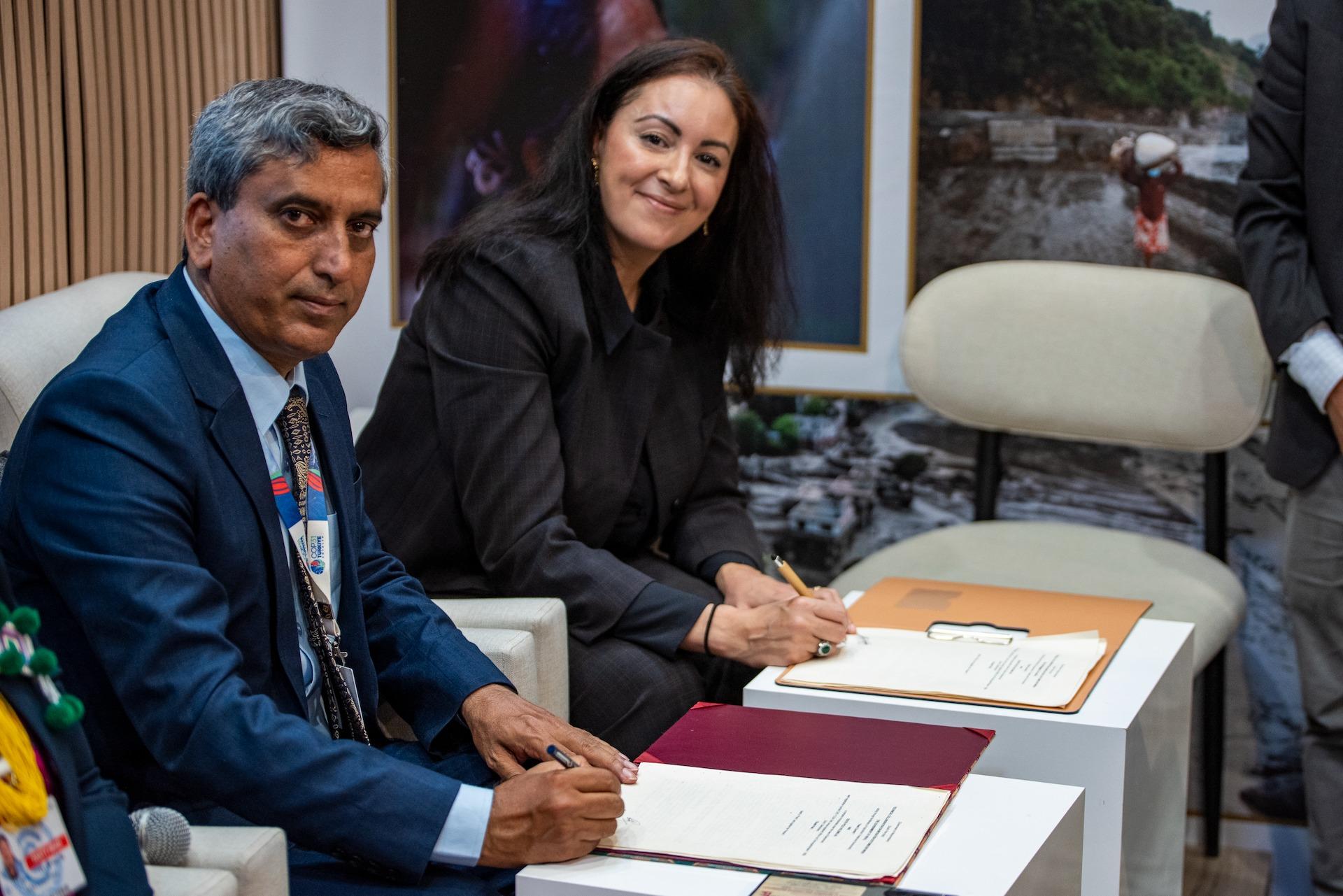
Dr. Rajendar Prasad Mishra, Nepal’s Secretary of Agriculture, Forests and Environment and Nadia Kaddouri, CEO of South Pole, sign the agreement at COP31.
Nepal's Government leads the legal framework, carbon and land rights, safeguards, benefit-sharing and registry. South Pole brings the technical design, raises the investment and connects the credits to compliance buyers under CORSIA and Article 6.
For the market, the agreement creates a pipeline for jurisdictional forest credits for airlines that need more than triple today's supply of CORSIA-eligible units. The programme will cover more than 2.5 million hectares across three provinces, designed under ART TREES for CORSIA and Article 6 buyers.
The agreement will also allow Nepal to reduce deforestation and forest degradation, strengthen forest management, improve wildfire control, and protect mountain watersheds. The programme is expected to create livelihoods for young people, with benefit-sharing and free, prior, and informed consent (FPIC) built into the design.
Look across the three announcements and a pattern emerges:
Governments led: Nepal leads the programme, Malawi mobilises finance for essential community services and Switzerland defines how it will buy.
Risk is shared early: clear volumes, decision windows and agreed roles turn a promise into a pipeline.
One partner spans the lifecycle: technical design, institutional support and commercial access sit together.
These COP31 announcements demonstrate the value South Pole’s model creates. We generate revenue for Nepal's forest assets, secure compliance-grade ITMOs for Switzerland's FOEN, and deliver CORSIA-compliant credits to market through official authorisations, turning climate ambition into executed commercial value.
Next year is the year the market gets tested, and we expect CORSIA demand to peak in 2027.
For buyer governments, the action is to lock in authorised supply early through long-term agreements. For host governments, it's to have LoA pathways and registries ready before CORSIA demand arrives.
Sourcing or developing Article 6 supply? Speak to one of our Article 6 specialists.