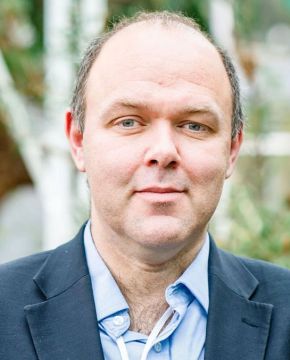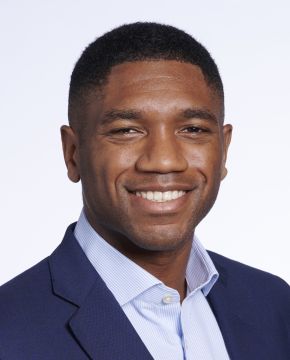
The picture is mixed. While many companies continue to set science-based targets and reduce emissions, turning ambition into action remains a hurdle. South Pole research among 600 senior US, UK, and EU executives highlights this gap: 90% run climate initiatives, but only 43% have a formally approved strategy underway. Unlocking real commercial value is often limited by operational barriers like governance silos, Scope 3 data complexity, technology shortages, and economic headwinds.
Join David Kennedy, CEO of SBTi, and Dara Olufon, Global Head of Advisory at South Pole, to see how SBTi helps companies break these deadlocks and drive verifiable emission reductions.What you'll get out of this webinar.
What you'll get out of this webinar:
The picture is mixed. While many companies continue to set science-based targets and reduce emissions, turning ambition into action remains a hurdle. South Pole research among 600 senior US, UK, and EU executives highlights this gap: 90% run climate initiatives, but only 43% have a formally approved strategy underway. Unlocking real commercial value is often limited by operational barriers like governance silos, Scope 3 data complexity, technology shortages, and economic headwinds.
Join David Kennedy, CEO of SBTi, and Dara Olufon, Global Head of Advisory at South Pole, to see how SBTi helps companies break these deadlocks and drive verifiable emission reductions.What you'll get out of this webinar.
What you'll get out of this webinar:
David Kennedy is a leader in sustainability and net-zero with a career spanning over three decades working in over thirty countries around the world.
Prior to joining the SBTi as CEO, he was a partner at EY, where he led work on net-zero strategy and planning with over twenty major companies across food, infrastructure, manufacturing and banking.
As Director General of Food, Biosecurity and Trade at the UK Government's Department for Environment, Food and Rural Affairs (Defra), David led on food strategy (including net-zero and nature), food security through Brexit and the Covid-19 pandemic, farming reforms for net-zero and nature, and food in trade deals with Australia and New Zealand. He also led on departmental transformation programmes, including strategy, governance, data and systems, and internal ways of working. He was chair of the Defra People Committee and Social Mobility Champion.
As Director General at the Department for International Development (DfID), he led design and implementation of a new approach to economic development in sub-Saharan Africa based on clean infrastructure, FDI and agriculture commercialisation. He was responsible for the UK's interests in the World Bank and regional IFIs. He also developed the departmental vision and was Diversity Champion.
Prior to this he was the founding Chief Executive of the UK's Committee on Climate Change (CCC). Under David's leadership, the CCC designed sector pathways, carbon budgets, targets, metrics, milestones, and key policies (e.g. Electricity Market Reform, EV and renewable heat support).
Earlier David led on fundamental reform of the EU ETS and the economic assessment for nuclear new-build. He also played key roles at the World Bank and EBRD, leading on infrastructure strategy, policy reform and major investments. He has a PhD in economics from LSE.
He was awarded a CBE for services to climate change and a CB for public service during Covid.
Dara Olufon is a seasoned executive with over 15 years of experience in sustainability, decarbonisation, and large-scale business transformation. Prior to joining South Pole, he served as a Partner at McKinsey & Company in the UK, where he was a leader in the Global Energy and Materials practice. His expertise spans several key areas including energy transition strategies for hard-to-abate industries, clean hydrogen, biofuels, carbon capture, e-mobility, and renewables, as well as strategic counsel to global financial investors on climate-focused investments. His work has helped drive large-scale, impactful change within industries seeking to evolve and reduce their environmental footprint. Dara holds a strong track record in delivering high-level strategic insights and facilitating the transition to a more sustainable, low-carbon future. He holds Bachelors and Masters degrees in Chemical Engineering from the University of Cambridge.
Nadia leads South Pole's Global Marketing, Communications and Public Affairs function, reporting to the CEO.
With well over a decade of experience in carbon markets, reputation management, corporate sustainability, and media relations, Nadia works with South Pole's global Marcomms team to successfully launch and position new growth-driving initiatives for the business.
Nadia joined South Pole in 2015 and has been instrumental in developing group-level marcomms strategy, as well as spearheading efforts to accelerate growth in areas of strength. This includes the development and launch of South Pole's annual Net Zero Report, a critical analysis of the corporate landscape and progress towards net zero.
Before joining South Pole, Nadia led a variety of communications for the Finnish Ministry for Foreign Affairs, Finnish National Commission on Sustainable Development and the European Commission. She holds a masters degree in International Business Communication from the Aalto University School of Economics.