


Restoring native forest and improving family incomes through participative reforestation
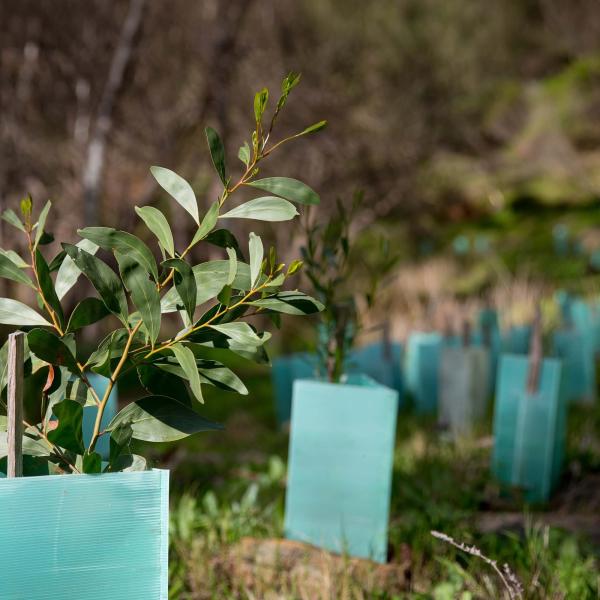
In Upper Guinea, families have long relied on fallow periods to let land recover between crops of rice, peanuts and fonio. As the population has grown, those fallows have shortened from 8–10 years in the 1970s to 3–5 years by the 1990s, depleting the soil. Fires set for land preparation, pest control and hunting sweep through every one to three years and kill young trees. Regrowth is cut for firewood, fodder and building material, partly because trees are widely seen as competing with crops. The result is degraded grassland and wooded savanna where forest could grow. Without income from restoring their land, families have little reason to let trees return.
To learn more about the Sustainable Development Goals verified by the standard for this project, please check the project's registry link above.
The ArboRise Participative Reforestation Project restores degraded land in the sub-prefectures of Linko, Damaro and Konsankoro in Kérouané, Upper Guinea. It brings together the Swiss non-profit arboRise, the Guinean NGO GUIDRE and South Pole as carbon asset developer. Local "seed families" are paid to collect seeds from 40 native tree species, including endangered species. "Field families" first protect their own land from fire, cutting and grazing so natural regeneration can take hold, then sow the seeds directly, 2 hectares a year over a three-year cycle. They maintain firebreaks, enrich plots where needed and harvest fruit, seeds and fodder using agroforestry practices. There is no commercial logging. The project is certified under the Gold Standard and runs in four three-year cycles from 2021 to 2033.
By 2033, the project aims to restore 6,150 hectares with about 2,000 families in 100 villages, sowing around 60 million seeds. It reforested 150 hectares in its first year and 500 hectares in 2022, and plans 500 hectares every year after that. Payments for seeds and land give families new income and bring additional income and status for women, and most carbon credit revenue is returned to participating landowners. A Community Management Committee in each village strengthens local governance. The restored forest is expected to increase biodiversity, protect water bodies and reduce soil erosion. The project is forecast to remove an estimated 55,708 tCO₂e on average per year.
