Australia's first year of mandatory climate reporting under the AASB S2 has set a new benchmark, bringing greater clarity on disclosure expectations, while revealing new complexities in data, systems, and accountability.
This session is designed as an opportunity to exchange perspectives, learn from organisations facing similar challenges, and spend an evening connecting with others.
Australia's first year of mandatory climate reporting under the AASB S2 has set a new benchmark, bringing greater clarity on disclosure expectations, while revealing new complexities in data, systems, and accountability.
This session is designed as an opportunity to exchange perspectives, learn from organisations facing similar challenges, and spend an evening connecting with others.
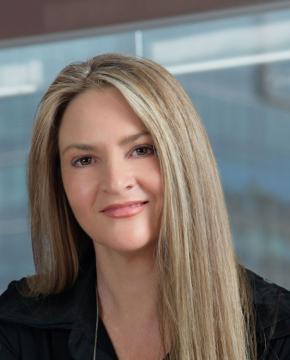
Karen is an Environmental Geoscientist and GM Sustainability at Dyno Nobel Limited, a global manufacturer and supplier of explosives and services to the resources sector, with a multibillion-dollar ammonia manufacturing base. Before her 15 years working for Dyno Nobel, Karen’s research investigated the use of stable oxygen and carbon isotope ratios in carbonate deposits from northwest Queensland to develop past average temperature curves for use in palaeoclimate reconstruction and the calibration of predictive climate change models. Karen has a working knowledge of the issues associated with climate change and the sustainability of both emission intensive manufacturers and Dyno Nobel’s mining, quarry and construction customers. She has completed Dyno Nobel’s NGER reporting since 2011, TCFD reporting since 2018 and oversees 3-yearly risk, opportunity and resilience assessments for Dyno Nobel using a range of bespoke future climate-related scenarios specific to Dyno Nobel. Karen has worked closely with Dyno Nobel’s engineers to develop its operational and scope 3 Net Zero pathways and has been involved in the development of ‘green ammonia’ projects within Dyno Nobel. She is currently drafting Dyno Nobel’s first ASRS aligned sustainability report.
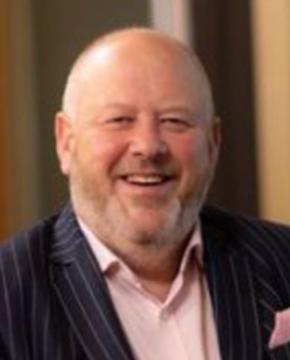
David is the Director of Sustainability for Accor. His role is focused on developing and delivering the Accor Group Sustainability and ESG strategies across its over 400 properties in the region. Carbon Emissions Reduction , Single Use Plastic removal, Food Waste & Sustainability , Eco Certification and Diversity & Inclusion are the key programs David is leading across stakeholders including owners, franchisee’s, government, suppliers and guests. Prior to joining Accor David was the Sustainability Program Director for the oneworld alliance and Executive Manager Sustainability for Qantas . He has extensive aviation and hospitality, loyalty, catering and operations experience in Australia, New Zealand and Asia with Qantas , Air New Zealand and the Journey Group Plc in the UK. His governance experience includes current Board roles with YHA Australia and the Golden Stave Foundation. He is a former Vice President of the Bobby Goldsmith Foundation, Director of Bio Energy Australia and sat on the IATA Sustainability Council and oneworld Environment & Sustainability Boards. Trained as a Chartered Accountant with Ernst & Young, David holds post graduate degree’s in Hospitality Management and Commercial Law and is a Graduate of the Australian Institute of Company Directors.
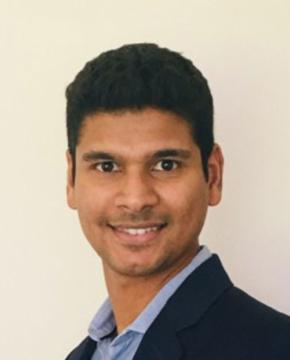
Ajit leads South Pole's Climate Risk services in APAC. He has overseen the end-to-end delivery of climate risk assessments, GHG inventories, and decarbonisation roadmaps for conglomerates, financial institutions and large agribusiness, retail and industrial supply chains across Asia-Pacific and Europe. Ajit also leverages his experience to help corporates build resilience strategies and integrate environmental risk management into their business. Ajit holds a Bachelor of Environmental Engineering (Hons) from Monash University and a Master of Climate Change from the Australian National University.