1.5 degrees.
It’s been a definitive metric of our profession in the climate space since 2015, our absolute boundary, our point of ‘no return’, our rallying cry. But is it still in reach?
Scientifically speaking, yes. The Paris Agreement is a twenty-year marathon. It is based on long-term climate averages, and we have not officially breached that long-term, multi-decade average.
But before you breathe a sigh of relief, let me ask a second question. Have we crossed the threshold of its consequences?
Absolutely. We absolutely have. And that is the reality we must confront today.
This may feel like a provocation or, to many of us who have fought to keep every fraction of a degree under 1.5, like defeat. But this is not a concession speech. Rather, a rallying cry for a completely new playbook for the reality we are waking up to - and the need for a new approach to how we engage our board and C-suites on the urgency of climate action.
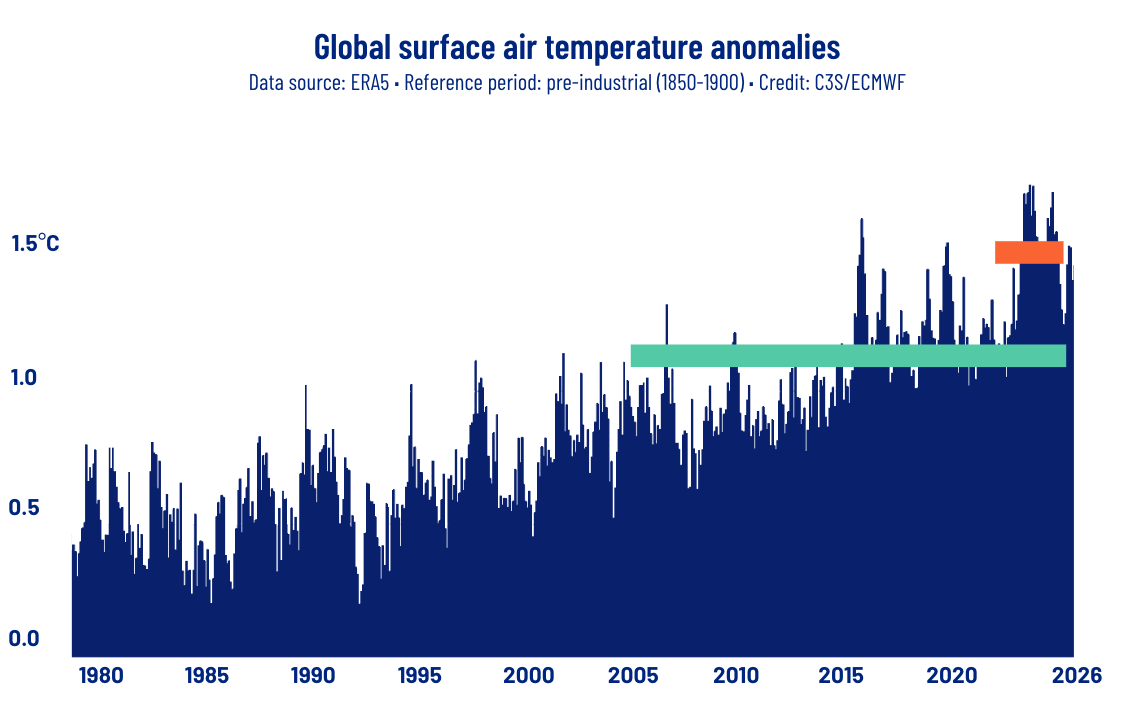
If you look at the chart below, you will see the critical difference between a twenty-year average (green) and a three-year streak (red).
Source: https://climate.copernicus.eu/surface-air-temperature-january-2026
Scientists measure risk in decades. But supply chains, insurers, major investors and board of directors measure it in quarters, halves or only a few years. And that’s the red line.
We are currently living through the first multi-year average temperature spike above 1.5°C in the post-industrial era. As sustainability leaders, the crucial pivot we have to make is to help our boards and executives understand that we cannot wait for a twenty-year scientific consensus to officially declare a breach before we start adapting to this reality, because this reality is already here, right now.
And while mitigation still matters, adaptation can’t wait.
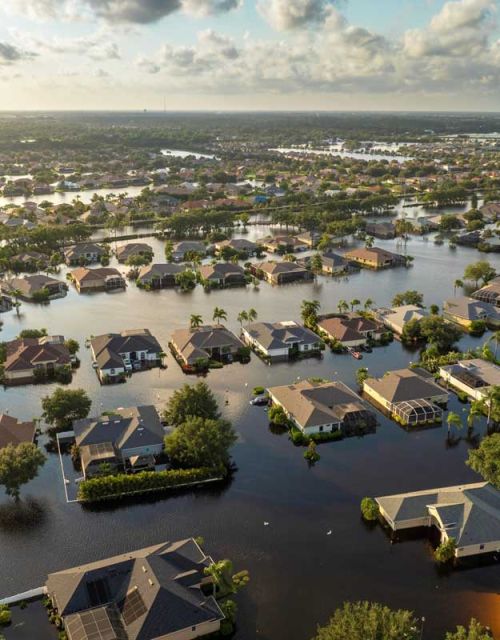
In 2025 the top ten extreme weather events alone resulted in economic losses of US$120 billion and insurers aren’t waiting for the twenty-year average to adjust their models.
When the physical impacts of our current 1.5°C-plus streak hit, insurance premiums don't just creep up—they skyrocket. Or, worse, coverage vanishes entirely.
Even renewable energy and solar projects, the solutions central to our transition, face a genuine insurance crisis as hail or flood coverage is withdrawn. So now a stranded asset isn't just a coal mine facing regulatory shutdown, it can be a flagship coastal distribution center, or a critical regional supply node, that you can no longer insure.
Peak actuaries are warning that this is leading to a growing insurance gap which is, in turn, a risk to the broader financial system.
So, how do we navigate this? How do we survive the Uninsurable Era? The good news is, as sustainability leaders, the answer is right in front of us.
If you currently see mandatory reporting as an administrative "burden" or a "compliance tax”, you’re not alone. But changing perspective on this is where the first opportunity lies.
In the Uninsurable Era, compliance reporting is effectively a government-mandated stress test. It forces your business to look at the operational data needed to spot risk and vulnerabilities before the market prices them in. But too often this information is simply packaged into a report, compliance is met and the company moves on.
Yet this information is enormously valuable when it comes to planning for the impacts of ongoing temperatures above 1.5 degrees. By embracing it as business intelligence, we can start to ask questions such as:
And from there, we can start to mitigate risk by asking:
Taking this approach is fundamental to engaging the C-suite, especially the CFO.
Imagine mapping your entire enterprise on a simple two-by-two matrix.
On the Y-axis, you plot your Climate Value-at-Risk —the hard, projected potential dollar loss from physical climate disruption drawn from your compliance-based scenario analysis.
On the X-axis, you plot Asset Criticality—how vital each specific asset or supply chain node is to your core revenue.
What emerges from this data are four clear, undeniable directives for your executive team.
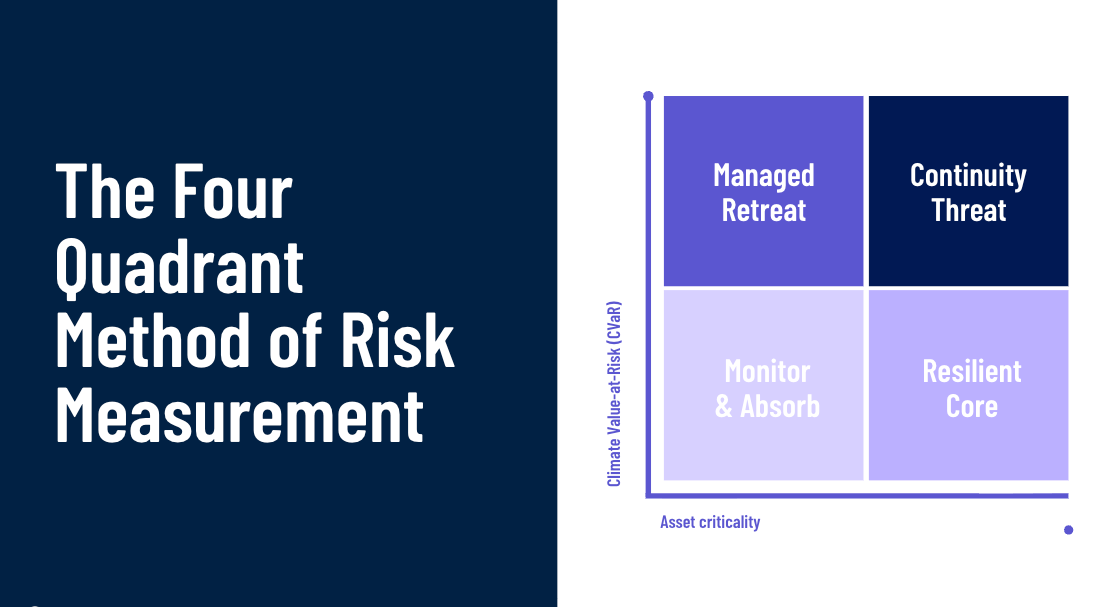
In the bottom left, the non-material risks that you simply Monitor and Absorb. It is cheaper to self-insure and absorb the occasional repair cost than it is to pay skyrocketing premiums or proactively over-engineer a low-priority asset, saving your budget for where it matters most.
In the bottom right, this is our Resilient Core. While your competitors are scrambling to relocate or harden their exposed assets, your primary revenue engines are sitting in low-risk zones. This is a massive competitive advantage. So your job here is to optimise and grow this quadrant.
In the top left, you find assets requiring Managed Retreat. High risk assets, but with low strategic value. Instead of throwing good money after bad to defend it, your smartest move is to sell it or prepare for its decline.
And finally, In the top right, you find your Continuity Threat. These are your highly critical, highly vulnerable assets. You don't debate return on investment here; this is where defensive compliance data directs immediate capital expenditure to protect the core business.

Of course, a matrix alone isn't going to solve all our problems, but it’s a good start. As sustainability leaders, the next step is to translate it into information boards and business leaders care about and understand.
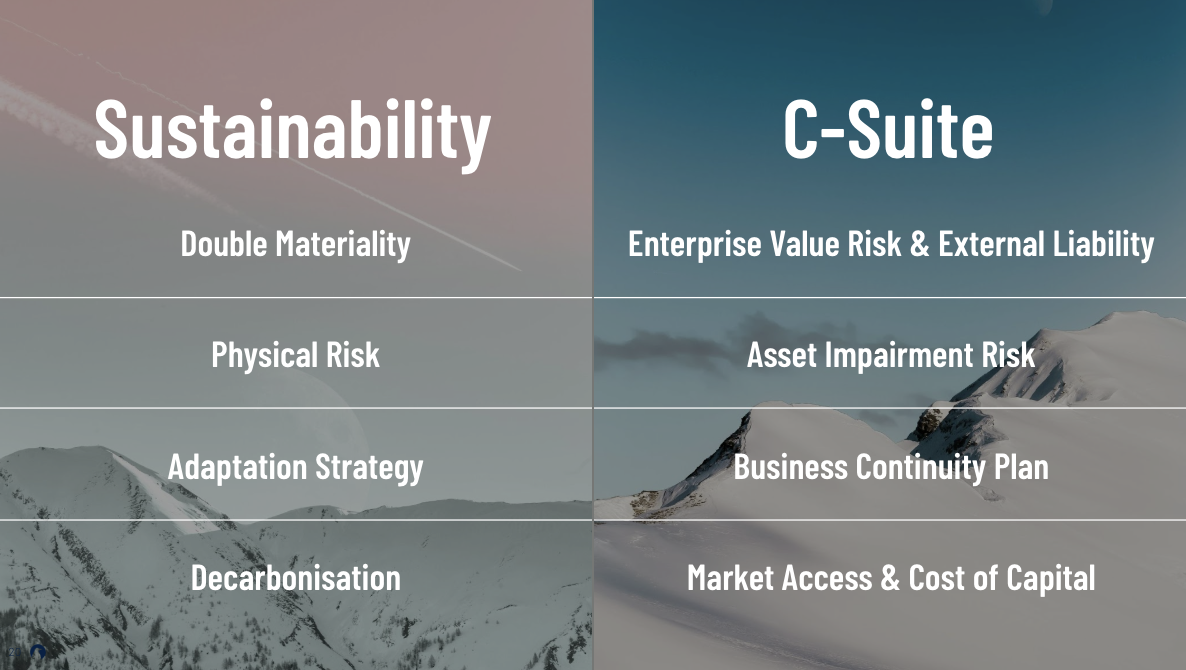
This starts by not leading the conversation about climate with the moral imperative. Of course, it is a moral imperative. But that doesn’t always resonate in the business world, so we have to translate our dialect into the language of boardrooms that are prioritising financial performance.
Pitch it as a competitive advantage so that, instead of seeing adaptation a sunk cost, your executives see it as a necessity to outlast underprepared peers and competitors in your industry.
This approach works for other sustainability terms too.
Instead of 'double materiality', talk about 'enterprise value risk & external liability'. Swap 'physical climate risk' for 'asset Impairment risk'. Rather than a 'climate adaptation strategy', rename it a ‘business continuity plan." And when you push for 'decarbonisation', make sure they hear the words, 'protecting market access and cost of capital'.
With a simple shift of vocabulary, you're talking their language. And that means you've got their attention. And means it's time to establish an asset protection framework.
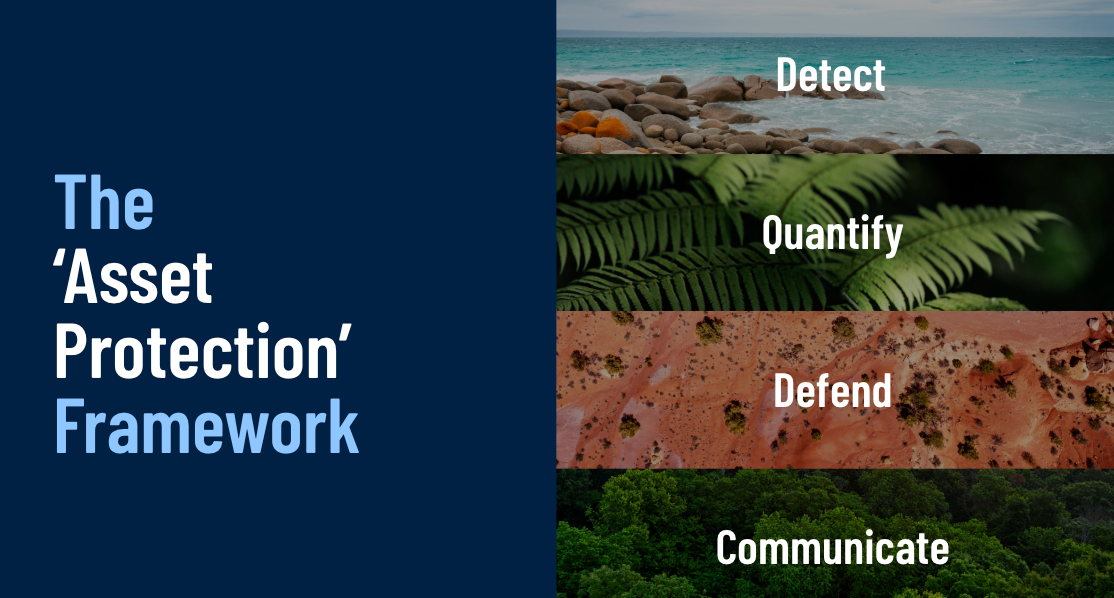
The asset protection framework is a simple, relentless four-step cycle that your business can use to protect itself and create competitive advantage in the Uninsurable Era. It works like this:
Everything I have written about above has been about adapting our businesses to the new reality.
But, please let me be clear: even deep in the Uninsurable Era, mitigation still matters.
If you look at the graph below you will see that while the last three years have gone beyond the 1.5 degree threshold, we haven’t lost the twenty-year average yet.
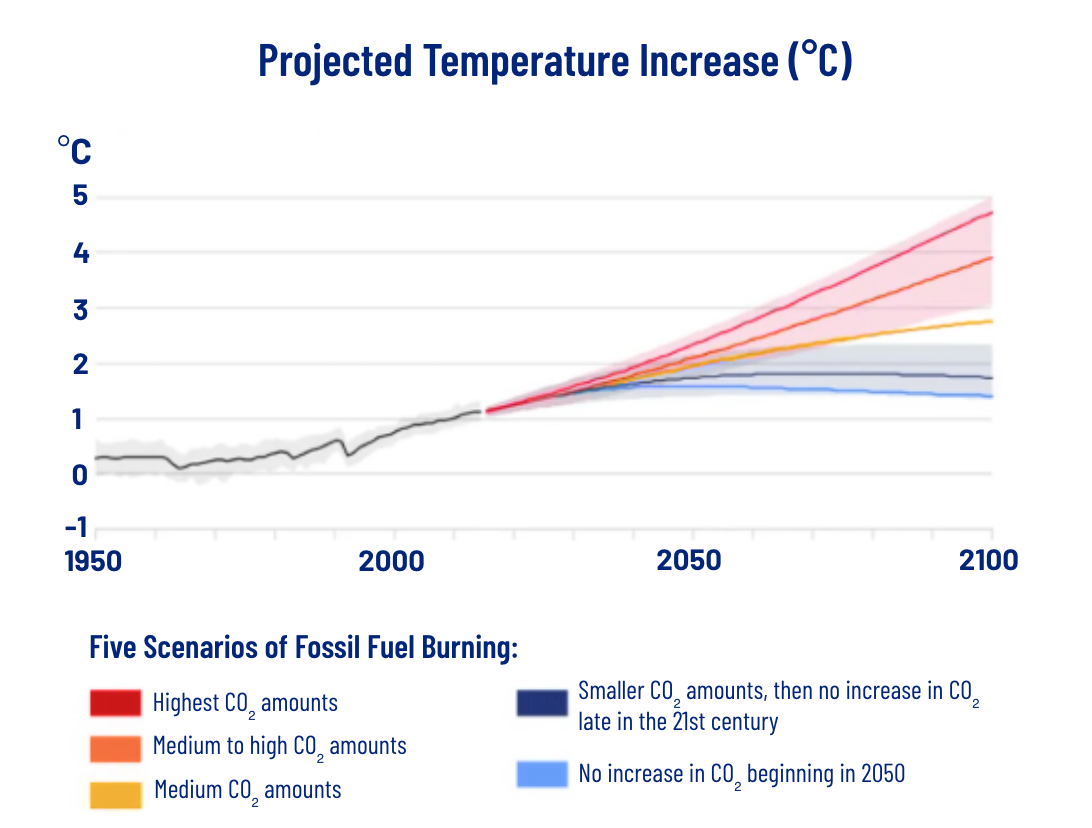
Source: https://scied.ucar.edu/learning-zone/climate-change-impacts/predictions-future-global-climate
Every fraction of a degree still matters immensely. When the bathtub is overflowing, we don’t just mop the floor, we also keep trying to turn that tap off, adapting for today while we mitigate for tomorrow.
The narrative in our industry has fundamentally shifted.
This is no longer just about trying to prevent a future crisis, it’s also about actively navigating a present one.
In the Uninsurable Era, the market will aggressively divide businesses into two categories: those reacting to market penalties, scrambling to cover uninsurable assets and paying for infringements, and those anticipating them.
The difference between those two companies is not their level of ambition, it’s their ability to integrate climate and sustainability considerations into their risk, strategy, operations, and communications. As sustainability becomes increasingly obsolete as a function, it increasingly becomes the new normal of doing business.
The data, while anecdotal, is undeniable, and the path forward is clear. As sustainability leaders, it's time to let your boards and executives know that we face a distinct choice.
You can lead your business through the overshoot, or you can let the market lead it for you.
Just as an industry we need to work together as if our collective future depends on it, we need our C-Suites to work together with us as if our commercial survival depends on it.
Because it does.

Understanding climate risks and addressing these may seem daunting. With the 'South Pole Quickguide' we've made it easy for you to learn the basics and know what to do next.