This article was originally published in Mexico Business News by Miguel Chavarría, Regional Director Climate Advisory, Latin America.
The world is facing a climate change crisis advancing faster than some scientific projections predicted 10 years ago, amid rising geopolitical tensions and numerous economic challenges that are hindering what should be efficient international cooperation.
The success of fighting climate change depends on the decisions we make now and implement over the next five years, making COP30 a pivotal moment to demonstrate greater ambition —and, above all, progress.
A key element of this coming COP will be the third generation of Nationally Determined Contributions (NDC 3.0). This third edition of contributions self-determined by the signatory parties to the Paris Agreement is expected to raise ambition beyond previous iterations.
Through it, countries are expected to demonstrate how serious they are about tackling climate change, aligning their national policies with what climate science says is needed to avoid the worst future consequences. Sectoral commitments and increased ambition, with a focus on key industries such as energy, industry, agriculture, and waste management, will be defining features of this new set of NDCs.
Such an increase in ambition will certainly also affect corporations worldwide, cascading down to them and directly influencing their strategic planning, regulatory compliance, and sustainability leadership positioning.
The NDC 3.0 is also expected to draw from the conclusions and recommendations of the first Global Stocktake completed in 2023. This Global Stocktake serves as a five-year cyclical assessment of the global collective effort to meet the Paris Agreement ambitions. It provides information to countries with the expectation that it will serve as input for future climate action. It also intends to foster cooperation, transparency, and accountability.
Unsurprisingly, an important outcome of the past Global Stocktake is that we are collectively falling short of doing what’s necessary to limit global temperature increase to 1.5 degrees Celsius compared to pre-industrial levels. The “good news” is that we are no longer on track for a 4-degree Celsius temperature increase.
The bad news is that, provided parties implement what they’ve committed to do in their previous versions of their NDCs, we’ll likely fall in the range of 2.1 to 2.8 degrees Celsius of temperature increase at the end of the century. However, while these commitments are not enough to warrant anything more than a reserved outlook, they do provide more precise feedback for course correction.
For example, it reinforces the short-term need for triple renewable energy and double energy efficiency, as well as the urgency to transition to net-zero energy systems and to preserve and restore ecosystems and nature, which, among other environmental services, also help keep carbon captured and stored.
As we get closer and closer to Belém, more countries are submitting their NDC 3.0, and a new synthesis report is expected to be published by the UNFCCC Secretariat in October, which will give us more insights about the persisting gap to the Paris Agreement objectives for 2030 and also some new ones for the year 2035.

To materialise and accelerate the deeply needed decarbonization, sufficient financial resources must be channelled in the right direction, and climate finance remains a critical topic on the COP agenda.
Last year at COP29 in Baku, nations established the New Collective Quantified Goal (NCQG), a target to mobilise at least $300 billion per year by 2035 from developed countries to support climate action in developing nations.
Furthermore, the ‘Baku to Belém Roadmap to 1.3T trillion’ was launched to enable the scaling up of financing to at least $1.3 trillion annually by 2035 for developing countries, from all sources (public and private), to support development pathways that are both low in GHG emissions and climate resilient.
Though these targets represent a significant step forward from the previous $100 billion goal, challenges persist. For example, adaptation finance remains notably underfunded relative to needs, and it’s essential to achieve a balance between mitigation and adaptation finance. Also, parties will likely work to enhance transparency, address systemic inequities, and integrate climate finance within broader sustainable development financing frameworks.
For Latin American countries, including Mexico, it is also essential to obtain international support combined with strengthened domestic financing mechanisms to drive climate initiatives.
Carbon markets will also capture a lot of attention, as they typically do. To start, some new Emission Trading Schemes are expected to be officially launched (or, more precisely, relaunched) at this COP.
Although its basis was officially established in 2024, Brazil is expected to publish the secondary regulation needed to launch the first phase of its scheme. It may also be the case that Mexico moves to the operational phase of its ETS.
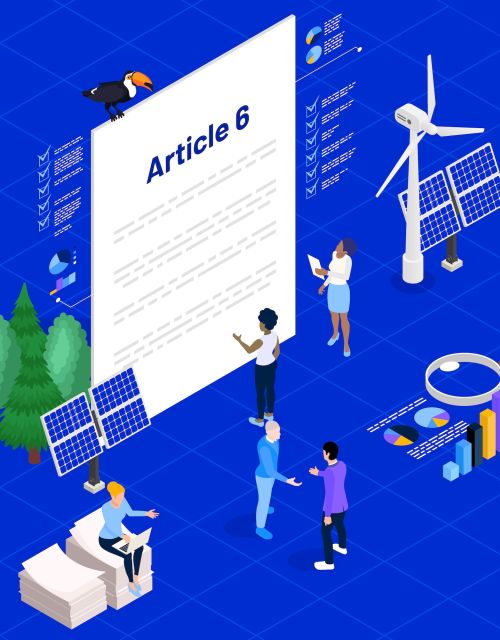
However, due to its high impact potential, Article 6 of the Paris Agreement will remain at the centre of the conversation. On the one hand, there has been significant progress in operationalising the Paris Agreement Crediting Mechanism (PACM) under Article 6.4. On the other hand, there have been some pilots for early ITMO transactions under Article 6.2 cooperative approaches.
Therefore, COP30 is set to represent a critical moment in realising the potential of Article 6 as a driver for enhanced international climate cooperation and ambition.

If you are wondering about businesses by now, let's address a few key points. At COP30 in Brazil, several key decisions are expected to significantly impact corporate operations. The conference is anticipated to advance measures requiring companies to enhance transparency on climate-related risks and emissions, aligning with evolving international country-level reporting standards under the Paris Agreement's Enhanced Transparency Framework (ETF).
The ETF includes aspects of climate risk reporting, though not as directly as frameworks such as TCFD or IFRS S2. The ETF requires parties to report on GHG sources, their progress toward their NDCs, and adaptation efforts, which, at the same time, comprises information related to climate change impacts and adaptation.
As climate finance remains vital for future talks, corporations must significantly increase their investments to help decarbonise the economy. Also, decisions on operationalising the NCQG on climate finance may increase financial flows to sustainable projects, impacting corporate financing and sustainability initiatives.
All these outcomes collectively point to an increasing expectation that corporations will integrate climate action into their core business models, corporate governance, investment decisions, and supply chain management.
NDC 3.0 presents a transformative opportunity for corporations worldwide to embed climate ambition into their core business strategies. By staying informed about policy updates, advancing sustainability investments, and fostering inclusive approaches, companies can drive in parallel climate resilience, tap emerging green markets, and contribute to a sustainable future for the region.
COP30 represents much more than government pledges. It is about how every part of society, including businesses, investors, and society in general, translates ambition into action. COP30 will be a decisive moment to turn lessons from past shortcomings into commitments that accelerate real-world transformation.
For Latin America and Mexico, it represents both a challenge and an unparalleled opportunity to align economic growth with climate resilience and inclusive prosperity. The choices made in the next few weeks will determine whether this generation delivers on the promise of the Paris Agreement: a more sustainable, more resilient, and more equitable future for all.


As one of the world's most experienced experts in carbon asset development and the company that helped facilitate the world's first Article 6 transaction, South Pole is well placed to support your climate journey.