The 2026 Carbon Market Buyer's Guide is our annual guide that keeps you up-to-date on what's shaping the market so you make smart decisions about your carbon credit portfolio. The guide is a comprehensive resource that deep dives into the current state of the market. But just in case you're short on time, we've summarised the highlights so you know which megatrends will shape the next five years and what to look out for this year.
Limiting global warming to 1.5° is becoming out of reach. If all current Nationally Determined Contributions (NDCs) are met, global warming projections for this century are still between 2.3° and 2.5°.
This exacerbates climate risk (which is very bad for business).
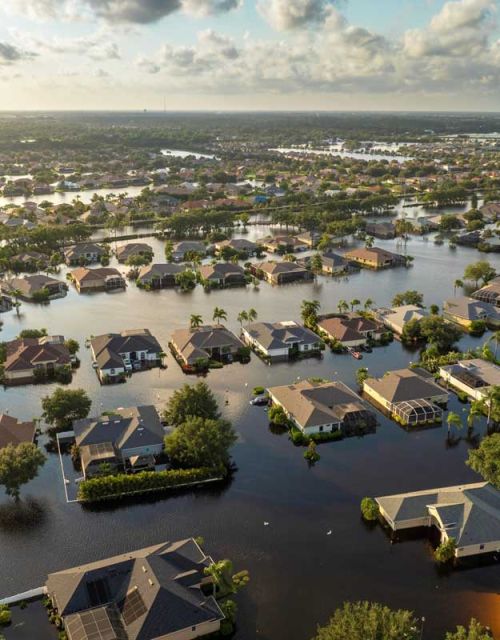
Climate change increases the chance of physical risk: loss from the physical impacts of climate change on organisation operations or supply chain. Last year alone, extreme weather cost the global economy $320 billion. And as the world moves to a low-carbon economy with changing regulations and net zero targets approaching, businesses are also met with transition risk: loss from changes in business fundamentals because of this shift.
To align with a 1.5° pathway and ensure long-term resilience, companies have to reach net zero—and it's become clear that carbon credits are an essential piece of the puzzle.
Net zero requires the dual approach of aggressive internal decarbonisation (as a priority) paired with high-integrity carbon credits to:
As more companies look to buy carbon credits, demand is going to rise. Increased demand, plus a limited supply, equals a likely increase in price. Investing now converts future credit needs into a predictable fixed price on the balance sheet.
Overall, a long term investment in carbon credits helps companies reach net zero, avoid future high prices and future-proof their business.

Long-term planning needs forward-looking insights, so we've identified the megatrends shaping the market over the next 5 years across integrity, demand, supply, policy, and price to help you understand what to expect.
The definition of quality is becoming more standardised in the carbon market. High-integrity is evolving from a differentiating feature to the minimum requirement for Voluntary Carbon Market (VCM) transactions. The 'integrity reset' is being driven by a collective industry effort (including the introduction of ICVCM CCP labels and growing evaluations from carbon credit rating agencies). And buyers are also increasingly leaning into the 'flight to quality'.
On the supply side, issuance volumes are expected to shrink as standards keep aligning with stricter principles and projects incorporate more demanding design, monitoring, reporting and verification requirements.
On the demand side, the focus on integrity will be reflected in purchasing patterns. For example, in 2025, credits rated A or higher by MSCI Carbon accounted for 36% of the US$1.4 billion retirement value.

The scaling of high-integrity is now also being unlocked through digitalisation. The accelerated adoption of Digital Monitoring, Reporting and Verification (dMRV) is creating continuous, verifiable data streams using tools like remote sensing and IoT. Plus, with the evolution of the 'digital twin' concept, project developers will be able to simulate financial viability and optimise the design of complex projects such as Carbon Capture and Storage (CCS). This digital transformation, supported by frameworks from large standard bodies like Verra and Gold Standard, will lead to fully digitised, AI-powered sales and trades of 'tokenised credits'.
Neutralising those 'hard-to-abate' emissions means more demand for carbon credits. The next decade will be defined by the accelerated scale-up and diversification of global removals capacity, for both Nature-Based Solutions (NBS) and Technology Removals (Tech CDR). The UN's Intergovernmental Panel on Climate Change (IPCC) estimates that 5 to 16 GtCO₂/yr of removals will be required by mid-century to align with Paris Agreement goals. This means the market will need to grow between 140 and 180x current levels.
The voluntary carbon market has the potential to provide the early funding and demand signal needed to fuel this growth. Early private finance is essential to support a dual-track portfolio of NBS Removals (for immediate scale) and Technical Removals (for durability).

Net zero commitments are fundamentally changing the way companies buy carbon credits. They're expected to move away from one-off purchases in favour of a strategic portfolio that's guided by frameworks like the Science Based Targets initiative (SBTi), the VCMI Claims Code and the Oxford Principles. These frameworks acknowledge that both 'avoidance' and 'removal' carbon credits are vital for reaching net zero. Of course, deep emissions cuts are the priority, but the latest SBTi draft has confirmed that using avoidance and removal credits to tackle ongoing emissions during the transition can actually help companies get 'Recognized' or 'Leadership' status.
Looking further ahead, SBTi is going to make it mandatory to use removals credits for a portion of those ongoing emissions from 2035 . This highlights that all carbon credits are important today, but there's a clear move towards 'long-lived removals' for achieving those ultimate net zero goals.
Despite the softening of some climate policies, overall we're seeing an increase in national carbon pricing mechanisms, like Emissions Trading Systems (ETS) and carbon taxes, with 80 instruments up and running worldwide. This means carbon pricing now covers about 28% of global emissions. And compliance demand is putting pressure on market supply. In 2023, compliance markets accounted for nearly a quarter of all carbon credit demand.
Regulatory pressure is phasing out the use of broad 'carbon neutral' claims. We're seeing a big global push to move away from those vague, voluntary green claims towards much more robust, legally-sound climate action. In the EU, for example, new rules like the Green Claims Directive and the Empowering Consumers Directive (starting from September 2026) will actually ban generic claims if they're purely based on offsetting, with fines of up to 4% of annual EU turnover if you don't comply. Essentially, the market now wants a split between reducing your own emissions and using carbon credits for complementary climate funding.
All of this brings us to price. The average price of credits has seen a dip over the past few years, but it's expected to turn around, with a 10x increase. Prices in high-quality scenarios are expected to be in the range of US$20 by 2030 and could hit US$238 by 2050. The focus on quality and integrity, combined with the growing demand from compliance markets is expected to drive up prices overall.
Carbon credits are also moving beyond being just a simple climate tool to becoming a globally recognised asset class. This 'financialisation' is bringing in institutional capital that will help to scale up funding and, in some scenarios, could unlock a market value of US$1.1 trillion annually by 2050.
The definition of high-quality is constantly being shaped. The ongoing assessment of methodologies by ICVCM is empowering buyers with another layer of evaluation. However, this should be complemented with other checks, like ratings provided by carbon credits rating agencies and quality assessments conducted by the carbon credits provider, if applicable (we have a full checklist available in the Guide) .

For the first time in Phase 1 (2024–2026), aeroplane operators have started receiving state notifications of their 2024 offsetting requirements. This compliance is triggering more demand-side activity, and a focus on long-term procurement strategies as aeroplane operators secure CORSIA Eligible Emissions Units (EEUs) against tight supply. The projected cumulative demand for CORSIA Phase I is pretty substantial, ranging from 105 to 236 million tonnes of CO2. EU-based aeroplane operators should buy early and ensure they satisfy both ICAO's CORSIA eligibility criteria and the specific EU eligibility requirements.
The final Corporate Net-Zero Standard V2.0 is expected to launch this year and introduce the Ongoing Emissions Responsibility (OER) framework. This framework standardises the actions companies take beyond value chain reductions. It provides flexibility as well as different recognition tiers for these actions, closely aligning with the Voluntary Carbon Market Integrity Initiative (VCMI) Claims Code of Conduct.
Companies will need to benchmark existing portfolios against the OER framework and removal requirements. Those with SBTi targets need to plan for scaling removals for neutralisation while also continuing to invest in high-quality avoidance and removals credits for hard-to-abate emissions.

Regulators are working to eliminate greenwashing and unsubstantiated claims. Across the EU, US, and Australia, generic environmental claims will be banned with severe financial penalties for rule-breakers. Carbon credit buyers operating globally should review their climate-related claims, both at a company level and a product level.
The CRCF will be the first EU-wide, voluntary carbon removal certification system for the quantification and verification of certain types of removals, including permanent carbon removals, carbon farming and carbon storage in products. The Commission is expected to formally adopt the first set of methodologies this year, covering key methods like Direct Air Capture and Storage (DACCS), Bioenergy with Carbon Capture and Storage (BioCCS) and Biochar. If you are sourcing removals from EU projects, you should clarify if the developer intends to transition to the CRCF. This affects whether credits may be eligible for future compliance use, which is especially important for companies covered by the EU ETS.

As of January 1, CBAM has begun its definitive (financial) phase, aligned with the phase-out of EU ETS free allowances. CBAM must be treated as a direct material cost. CBAM certificates will first be available from 1 February 2027, allowing importers to buy certificates retroactively for their 2026 imports. Companies need to use verified embedded emissions data for their declarations, with foreign carbon prices paid at origin creditable against the CBAM liability where evidence is provided.
Impacted companies should reach out to suppliers as soon as possible to secure verified emissions data and integrate CBAM liability into financial modelling, product costing and overall supply chain strategy to mitigate significant new tariffs.
The Paris Agreement Crediting Mechanism (PACM), the UN-governed successor to the CDM, is launching its first methodologies and infrastructure. We expect to see:
PACM operationalisation represents a positive structural signal for buyers focused on long-term credibility as it provides an added sign of quality.
Dive into the details by downloading the 2026 Carbon Market Buyer’s Guide (it’s free!).
In the guide, you’ll find more on everything in this blog, along with top tips for buyers looking to purchase now and a handy step-by-step checklist giving you the key questions to ask yourself. Our checklist covers everything from framework to mitigation outcomes to contractual requirements to help you put together your robust, future-proof portfolio.

Navigate the 2026 carbon market structural shifts, avoid price shocks, and align with the latest policies and standards. Download our guide to turn carbon credits into high-integrity strategic assets.